Deutsche Börse Photography Foundation
20.02.2026 - 16.08.2026
Die ausgestellten künstlerischen Positionen reflektieren biografische Erfahrungen, subjektive Wahrnehmungsmuster und persönliche Interessen. Gleichzeitig verflechten sich diese individuellen Ausgangspunkte mit kollektiven Realitäten und übergeordneten Themen. Sie zeigen alltägliche wie übernatürliche, hoffnungsvolle wie katastrophale Momente, immer auf der Suche nach Übergängen, Schwellen oder Grenzen. Zeitgenössische Mikrokosmen stehen Erinnerungsräumen gegenüber, in denen ostdeutsches Gedächtnis, koloniale Kontinuitäten oder migrantische Resilienz verhandelt werden. Urbane Infrastrukturen und menschliche Ordnungen treffen auf die Verwundbarkeit der Natur und offenbaren eine fragile Balance. Gesellschaftliche Spannungen – gegenwärtige und vergangene – werden visuell verarbeitet.
Die in der Ausstellung gezeigten Künstler*innen sind: Lena Bils, Charlotte Burkhardt, Simon Gilmer, E. Elif Gönüllü, Nelly Habelt, Philomena Hummel, Elinor Zoë Karl, Lea Kulens, Len David Oswald, Marie Schwarze, Markus Seibel, Madlen Strebel, Tatiana Vdovenko und Kerstin Weiser.
Kuratiert wurde die Ausstellung von: Polina Arzhenovskova, Leonie Cecco, Fanny Dommers, Aissata Drieling, Charlotte Häger, Antonia Janke, Egor Miroshnichenko, Alexandra Rücker, Mattis Thomsen, Max Zimmermann und Carla Veit. Die Zusammenarbeit erfolgt unter der Leitung von Anne-Marie Beckmann, Direktorin der Deutsche Börse Photography Foundation, Stefanie Heraeus, Leiterin des Studiengangs Curatorial Studies an der Goethe-Universität Frankfurt und Martin Liebscher, Professor an der HfG Offenbach.
(Auszug aus der Website)
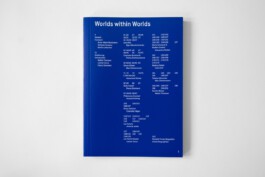
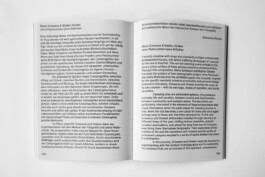
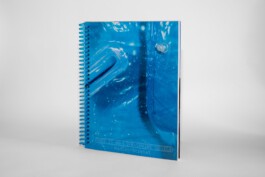
Der Katalog nutzt eine selektive Seitennummerierung, um einen Rhythmus zwischen Inhalt und Leere zu schaffen. Technische Informationen wurden auf den Umschlag verlagert, wodurch die konzeptionelle Struktur der Publikation unterstrichen wird, während das körnige Umschlagpapier und das Pantone-Reflexblau sie an die visuelle Identität der Institution anpassen.
Die Publikation entstand im Rahmen der Ausstellung und wurde von Ella Petschetschjan gestaltet.
ENG
The artistic works on display reflect biographical experiences, subjective patterns of perception, and personal interests. At the same time, these individual starting points intertwine with collective realities and overarching themes. They depict moments that are both everyday and supernatural, hopeful and catastrophic, always in search of transitions, thresholds, or boundaries. Contemporary microcosms are juxtaposed with spaces of memory in which East German history, colonial continuities, and migrant resilience are explored. Urban infrastructures and human social structures encounter the vulnerability of nature, revealing a fragile balance. Social tensions—both present and past—are visually explored.
The artists featured in the exhibition are: Lena Bils, Charlotte Burkhardt, Simon Gilmer, E. Elif Gönüllü, Nelly Habelt, Philomena Hummel, Elinor Zoë Karl, Lea Kulens, Len David Oswald, Marie Schwarze, Markus Seibel, Madlen Strebel, Tatiana Vdovenko, and Kerstin Weiser.
The exhibition was curated by: Polina Arzhenovskova, Leonie Cecco, Fanny Dommers, Aissata Drieling, Charlotte Häger, Antonia Janke, Egor Miroshnichenko, Alexandra Rücker, Mattis Thomsen, Max Zimmermann, and Carla Veit. The collaboration is led by Anne-Marie Beckmann, Director of the Deutsche Börse Photography Foundation, and Stefanie Heraeus, Head of the Curatorial Studies program at
Goethe University Frankfurt and Martin Liebscher, professor at the HfG Offenbach.
(Excerpt from the website)
The catalog uses selective page numbering to create a rhythm between content and white space. Technical information was moved to the cover, thereby emphasizing the publication’s conceptual structure, while the textured cover paper and Pantone Reflex Blue align it with the institution’s visual identity.
The publication was produced as part of the exhibition and designed by Ella Petschetschjan.


27.01.2026 - 07.03.2026
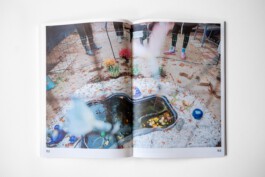
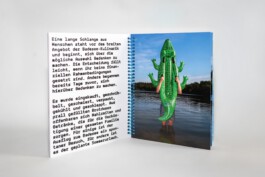
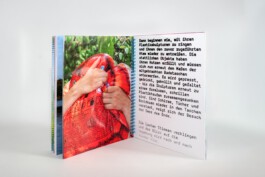
Die Publikation betrachtet aufblasbare Schwimmkörper als Skulpturen, die die Grenzen zwischen Körper, Material und geformter Natur verhandeln. Sie erforscht das Versprechen von Sicherheit und Leichtigkeit und dessen Zerfall, wenn Luft, Form und Kontrolle entweichen. In einer intimen Choreografie aus Halt, Widerstand und Umarmung begegnen sich Mensch und Objekt. Der Badesee wird zur künstlichen Bühne für Eskapismus, Oberfläche und Verletzlichkeit.
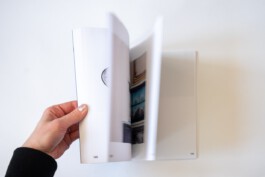
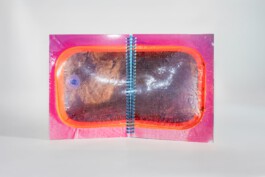
Die Publikation ist in enger Zusammenarbeit mit der Materialität der Ausstellung entstanden: Die Seiten sind Spritzwasserschützend beschichtet, eine Spiralbindung ermöglicht sehr praktische Handhabung und über dem Cover liegt eine Vinyl-Seite mit integriertem Ventil, die die Materialität noch einmal aufgreift.
ENG
This publication examines inflatable flotation devices as sculptures that negotiate the boundaries between the body, material, and shaped nature. It explores the promise of safety and lightness—and its dissolution—as air, form, and control escape. In an intimate choreography of support, resistance, and embrace, human and object encounter one another. The swimming lake becomes an artificial stage for escapism, surface, and vulnerability.
The publication was created in close collaboration with the materiality of the exhibition: The pages are coated to protect against splashes, a spiral binding makes it very practical to handle, and the cover is topped by a vinyl sheet with an integrated valve, which once again echoes the materiality of the exhibition.

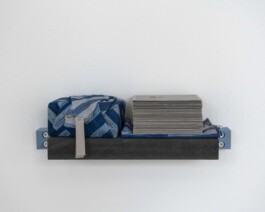
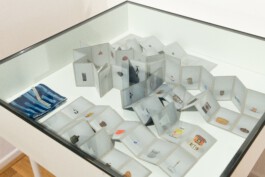
Dieses Projekt widmet sich dem Nachlass meiner Großeltern, der nach ihrem Tod in ihrem Haus fotografisch dokumentiert wurde. Ziel war es, ein Archiv zu erstellen, das sowohl emotional bedeutsame als auch alltägliche Gegenstände umfasst – Objekte, die das Familienleben über viele Jahre hinweg geprägt haben. Die Dokumentation erfolgte, bevor die Gegenstände im Zuge des Ausräumens das Haus verließen und ihren vertrauten Kontext verloren.
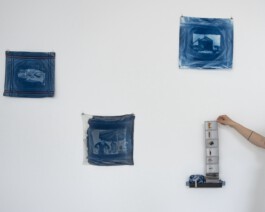
Das daraus entstandene Buch ist eine kreative Interpretation eines Leporellos, das sich in verschiedene Richtungen entfalten lässt. Dadurch entsteht eine visuelle Reise durch die einzelnen Räume des Hauses, dargestellt durch Fotografien der Objekte.
Ergänzt wird das Projekt durch Cyanotypien, die auf alten Stofftaschentüchern meiner Großeltern belichtet wurden. Sie zeigen verblassende Fotografien aus dem Familienarchiv und wirken wie schwebende Fragmente von Erinnerungen, die sich durch das Buch ziehen.
Ein Exemplar des Buches befindet sich in der Sammlung des Klingspor Museum Offenbach
copyright Foto 1 und 2 v.l.n.r.: Lea Kulens
ENG
This project focuses on my grandparents’ estate, which was photographically documented in their home after their passing. The goal was to create an archive that includes both emotionally significant and everyday items—objects that shaped family life over many years. The documentation was carried out before the items left the house during the cleanup process and lost their familiar context.
The resulting book is a creative interpretation of a leporello that unfolds in various directions. This creates a visual journey through the individual rooms of the house, depicted through photographs of the objects.
The project is complemented by cyanotypes exposed onto my grandparents’ old cloth handkerchiefs. They feature fading photographs from the family archive and appear like floating fragments of memories that run throughout the book.
A copy of the book is part of the collection at the Klingspor Museum in Offenbach.
Copyright Photos 1 and 2, from left to right: Lea Kulens
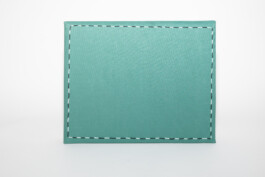
Jahresrückblick
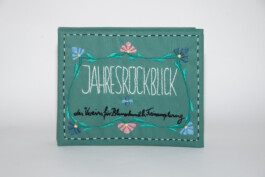
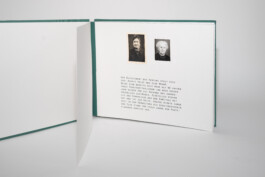
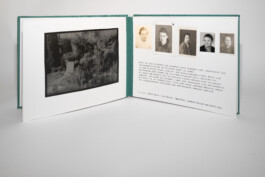
Eine Buch-Arbeit im Stil von alten Zigarettenbilder-Sammelalben (ca. 25cm x 20cm, handgestickt und handgeschnitten),
in der einer über Jahrzehnte zusammengetragenen alten Passbildsammlung neue Identitäten und Geschichten zugeordnet werden. Dies geschieht in Kombination mit Handabzügen auf abgelaufenem Fotopapier von Fotos aus dem Archiv meiner Großeltern.
Die Arbeit war Teil des HfG-Rundgangs 2023 und wurde im Fachbereich Fotografie von Prof. Martin Liebscher ausgestellt.
ENG
A book-based work in the style of old cigarette picture albums (approx. 25 cm x 20 cm, hand-embroidered and hand-cut),
in which a collection of old passport photos gathered over decades is given new identities and stories. This is done in combination with hand-printed prints on expired photo paper of photos from my grandparents’ archive.
The work was part of the HfG Exhibition 2023 and was exhibited in the Photography Department by Prof. Martin Liebscher.